

Toxic backlinks represent one of the most dangerous threats to your website’s search engine rankings and organic visibility. These harmful links originate from low-quality, spammy, or irrelevant websites that can trigger Google penalties and dramatically reduce your site’s credibility. Understanding how to identify, analyze, and eliminate these detrimental connections is essential for maintaining a healthy backlink profile and protecting your digital presence.
Key takeaways
-
Toxic backlinks damage rankings through unnatural patterns and spam signals
-
Spam score filtering automates detection before search engines process harmful connections
-
Manual investigation reveals nuances that automated tools frequently overlook completely
-
Direct removal outperforms disavowal by eliminating problems at their original source
-
Google’s disavow tool requires weeks for processing and proper plain-text formatting
What exactly are toxic backlinks?
Toxic backlinks are incoming hyperlinks that negatively impact your website’s authority in search engine algorithms. They differ fundamentally from natural, high-quality links that genuinely benefit your site. These harmful connections typically come from websites engaged in manipulative practices or those penalized by search engines.
Search engines evaluate links based on multiple quality signals. When your site receives links from sources exhibiting spammy characteristics, it creates associations that damage your reputation. The connection works both ways. If problematic sites link to you, algorithms may assume your content shares similar low-quality attributes.
Several distinct categories define toxic backlinks. Backlinks farms exist solely to manipulate rankings through artificial link networks. Comment spam appears when automated bots flood blog comment sections with irrelevant links. Hacked website links emerge when malicious actors compromise legitimate sites to insert unauthorized connections. Private blog networks operate multiple interconnected sites designed exclusively for link manipulation.
Why toxic backlinks destroy your SEO performance
The consequences of toxic backlinks extend far beyond simple ranking drops. Google’s algorithms continuously evaluate the quality and relevance of your link profile. When toxic patterns emerge, multiple negative effects cascade through your site’s performance.
Algorithmic penalties occur automatically when Google’s systems detect unnatural link patterns. Your rankings gradually decline across multiple keywords as the algorithm reduces trust in your domain. Manual actions represent more severe interventions where human reviewers at Google identify deliberate manipulation. These penalties can remove your site entirely from search results until resolved.
Negative SEO attacks introduce another dimension of risk. Competitors or malicious actors deliberately build toxic links pointing to your site. This strategy attempts to trigger penalties and damage your rankings. While Google claims to discount most of these attacks automatically, concentrated campaigns can still cause significant harm.
Understanding spam score metrics and evaluation criteria
Spam score provides a quantifiable measure of how likely a website is to be penalized by search engines. Different tools calculate this metric using various signals and indicators. The score typically ranges from zero to one hundred, with higher values indicating greater risk.
Multiple factors contribute to spam score calculations. Domain age plays a role, as very young domains often correlate with temporary spam sites. The ratio of external to internal links matters significantly. Sites with abnormally high outbound link counts relative to content usually engage in link schemes.
Content quality signals heavily influence spam scores. Thin content pages with minimal valuable information raise red flags. Keyword stuffing and over-optimization create obvious manipulation patterns. The presence of adult content, gambling links, or pharmaceutical products without legitimate business context increases scores substantially.
| Spam Score Range | Risk Level | Recommended Action | Typical Characteristics |
|---|---|---|---|
| 0-30% | Low Risk | Monitor regularly | Legitimate sites with quality content |
| 31-60% | Medium Risk | Investigate thoroughly | Some suspicious signals present |
| 61-100% | High Risk | Consider disavowing immediately | Multiple spam indicators detected |
Method 1: Advanced backlink monitoring with spam score filtering
Sophisticated backlink monitoring tools revolutionize how you identify toxic links. Our backlink monitoring platform with the Discovery module automatically detects harmful connections through intelligent spam score filtering. This system continuously scans your link profile and flags suspicious patterns before they cause damage.
The spam score filter at https://backlinks-monitor.com/dashboard/ analyzes every incoming link against multiple quality parameters. It evaluates referring domain authority, content relevance, anchor text patterns, and historical behavior. When the system identifies links exceeding your defined spam threshold, it generates immediate alerts.
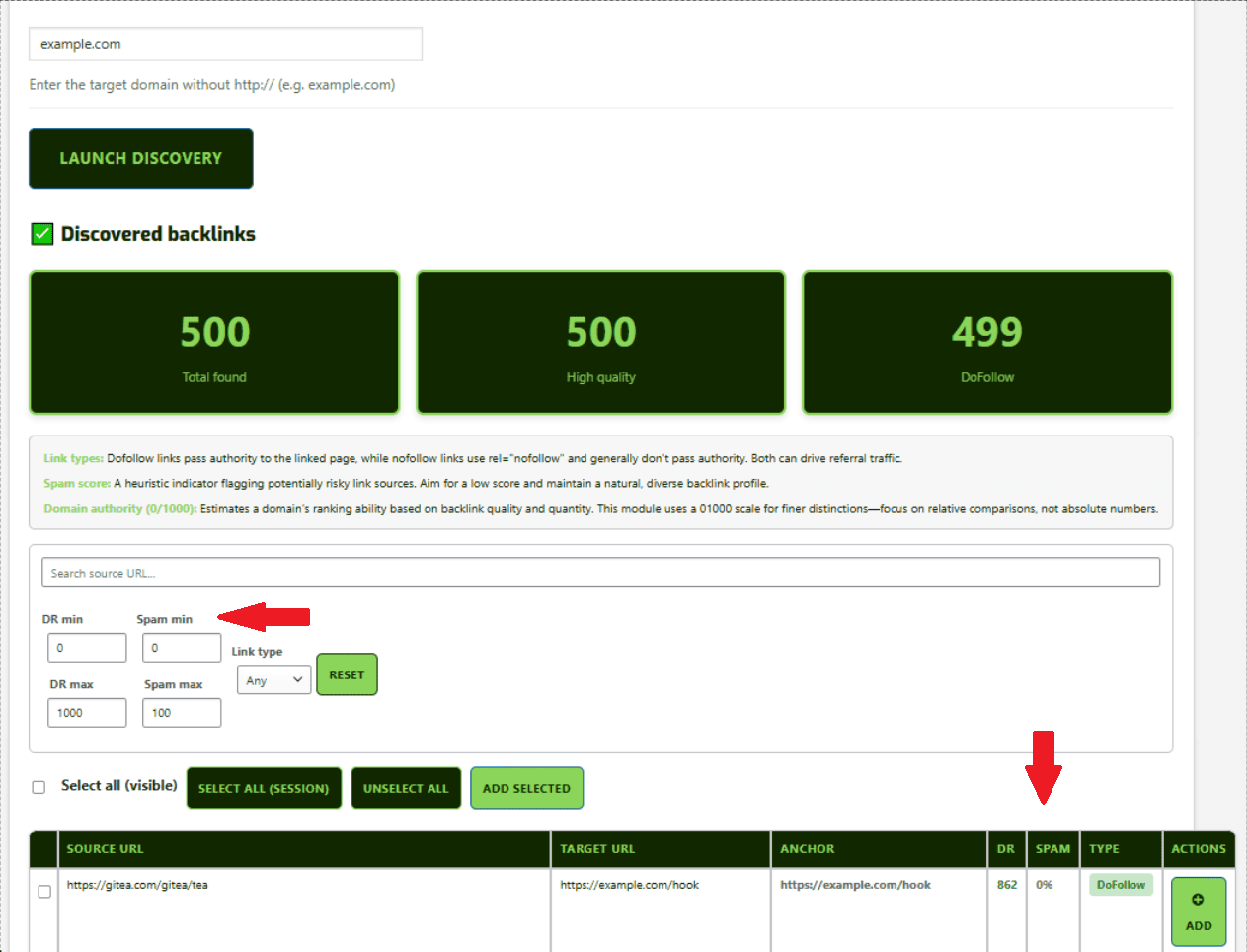
Real-time monitoring provides distinct advantages over periodic manual audits. You receive notifications within hours of new toxic links appearing. This rapid detection enables quick response before search engines process the harmful signals. The Discovery module also identifies patterns suggesting negative SEO attacks, allowing you to document and address coordinated campaigns systematically.
Method 2: Comprehensive analysis using Google Search Console
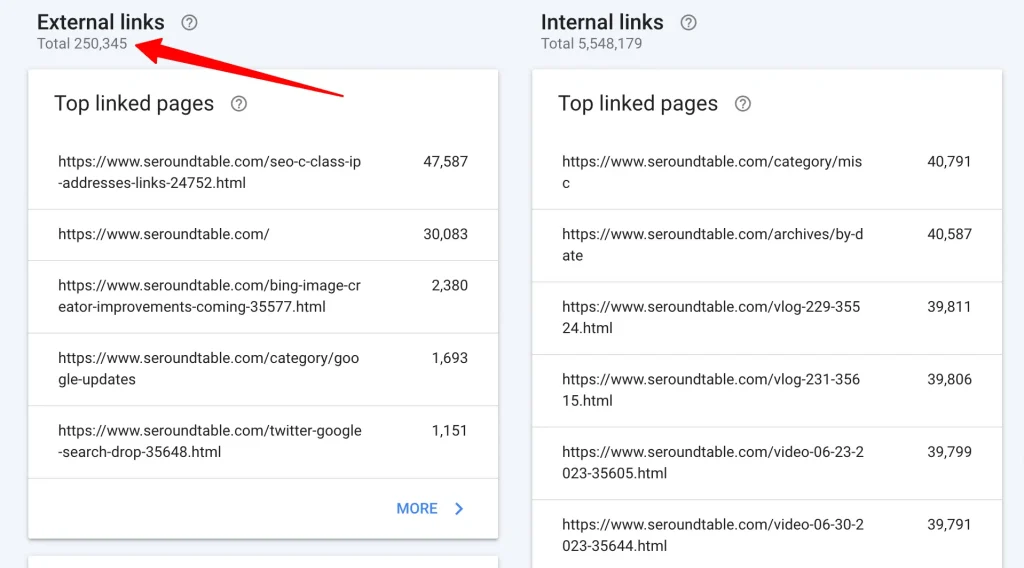
Google Search Console offers direct insight into how the search engine views your backlink profile. This free tool provides the most authoritative data since it reflects exactly what Google’s crawlers have discovered. Accessing your backlink data through Search Console ensures you’re working with the same information influencing your rankings.
Navigate to the Links section in your Search Console property. The interface displays your top linking sites, most linked content, and anchor text distribution. Export the complete list of external links pointing to your domain. This dataset serves as your foundation for identifying problematic connections.
Analyze patterns within the exported data carefully. Look for clusters of links from similar domains or identical IP addresses. Identify referring sites with suspiciously high link counts to your domain. Check for PageRank anomalies where low-authority sites link excessively. These patterns often indicate artificial link building rather than organic references.
Method 3: Professional SEO tools with toxicity algorithms
Specialized SEO platforms employ sophisticated algorithms to evaluate link toxicity. These tools aggregate data from multiple sources and apply machine learning models trained on known penalty patterns. They provide toxicity scores that go beyond simple spam detection.
Leading platforms analyze dozens of quality signals simultaneously. They examine referring domain trust metrics, historical penalty data, content relevance matching, and link velocity patterns. The systems identify subtle manipulation tactics that simple spam score calculations might miss. They also provide context-specific recommendations based on your industry and competitive landscape.
Configure regular automated audits through these platforms. Schedule weekly or monthly scans depending on your link acquisition velocity. Set up custom alert thresholds that match your risk tolerance. More aggressive link building campaigns require stricter monitoring, while established sites with organic link growth can use more relaxed parameters.
| Tool Category | Primary Strength | Ideal Use Case | Data Refresh Frequency |
|---|---|---|---|
| Comprehensive Platforms | All-in-one analysis | Regular full audits | Weekly to monthly |
| Specialized Monitors | Real-time detection | Active campaign protection | Daily to hourly |
| Search Console | Official Google data | Authoritative validation | Updated continuously |
Method 4: Manual deep-dive investigation techniques
Automated tools provide excellent initial filtering, but manual investigation reveals nuances algorithms might miss. Personally examining suspicious referring domains gives you contextual understanding no automated system can replicate. This hands-on approach identifies edge cases and prevents false positives.
Visit each flagged referring domain directly in your browser. Evaluate the overall site quality, content relevance, and user experience. Check whether the site appears abandoned or recently created. Examine the context surrounding your backlink. Links buried in footers, sidebars, or irrelevant content blocks signal manipulation.
Investigate the site’s broader link profile using backlink explorers. Sites linking to hundreds of unrelated domains across different industries often participate in link schemes. Check the referring site’s own inbound links. If it receives connections exclusively from other suspicious sources, this confirms participation in a private blog network.
Method 5: Competitor backlink profile comparison
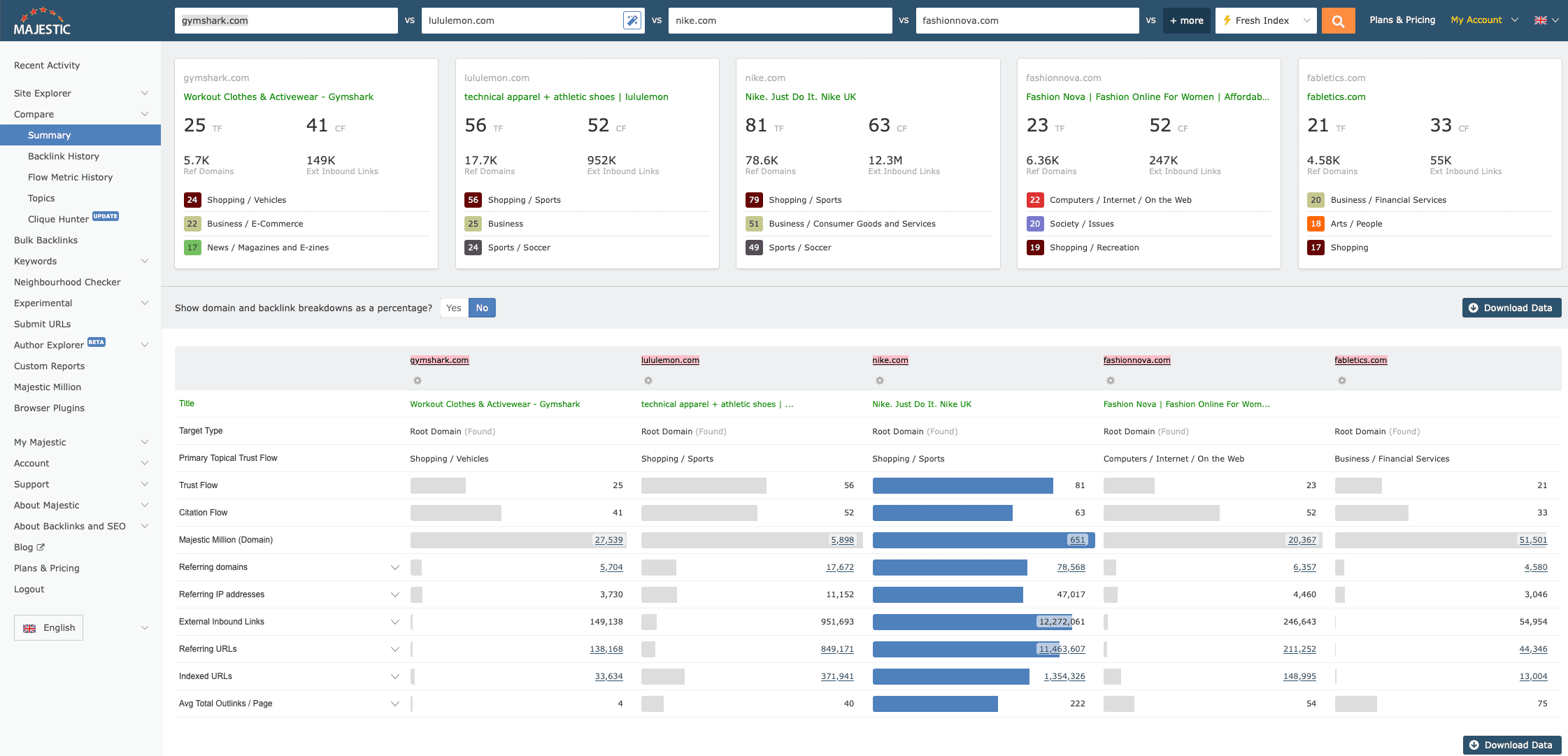
Analyzing competitor link profiles reveals what Google considers acceptable in your niche. This comparative approach establishes baselines for normal linking patterns within your industry. Significant deviations from these patterns suggest problematic links requiring attention.
Select three to five direct competitors ranking well for your target keywords. Export their complete backlink profiles using professional SEO tools. Compare the types of referring domains, anchor text distributions, and link acquisition velocities. Identify referring domains linking to competitors but not to you.
Focus particularly on sites linking to multiple competitors but avoiding your domain entirely. These often represent legitimate opportunities for outreach. Conversely, if your site receives links from sources completely absent from competitor profiles, investigate those connections carefully. They may represent toxic links your competitors successfully avoided.
Method 6: Anchor text pattern analysis for manipulation detection
Anchor text distribution provides powerful signals about link naturalness. Organic link profiles display diverse anchor text reflecting how people naturally reference content. Manipulated link profiles show suspicious patterns that immediately identify artificial building tactics.
Natural profiles contain predominantly branded anchors, naked URLs, and generic phrases. Exact match commercial keywords should represent a small percentage of your total anchors. When exact match keywords dominate your anchor text distribution, this signals deliberate over-optimization.
Calculate the percentage of each anchor text type in your profile. Branded anchors should comprise forty to sixty percent of natural profiles. Generic anchors like « click here » or « read more » typically account for twenty to thirty percent. Exact match keywords exceeding fifteen percent warrant investigation. Identify the sources of over-optimized anchors and evaluate whether those links require disavowal.
How to remove toxic backlinks through direct outreach
Direct removal represents the ideal solution for toxic backlinks. Successfully removing links at the source completely eliminates the problem without requiring Google intervention. This approach works best for recently acquired toxic links from sites with active webmasters.
Create a prioritized removal list starting with the highest toxicity links. Draft professional removal request templates explaining that you’ve identified an unwanted link to your site. Keep messages brief, polite, and specific about which URL contains the problematic link. Provide exact source and destination URLs to simplify the removal process.
Send removal requests to site contact emails, webmaster accounts, or contact forms. Track all communications in a spreadsheet with dates, contact methods, and responses. Follow up once after seven to ten days if you receive no response. Document all removal attempts thoroughly as Google may request this evidence during reconsideration processes.
Example :
Subject: Request for Backlink Removal from [Their Domain]
Dear Webmaster / Site Owner,
I hope this message finds you well.
I am the owner of [YourDomain.com], and during a recent review of our backlink profile, I noticed that your website [TheirDomain.com] contains a link pointing to our site.
Link Location:
Source page: [Their full URL with the link]
Target page: [Your full URL being linked to]
We are currently conducting a comprehensive audit of our backlink profile to ensure compliance with Google’s quality guidelines. As part of this process, we are reaching out to webmasters to request the removal of links that may not be beneficial for either of our sites.
Would you kindly remove this link from your website?
We would greatly appreciate your cooperation in this matter. If you could confirm the removal or let me know if you have any questions, I would be happy to discuss this further.
If I don’t hear back within 10 business days, I’ll assume you’re unable to accommodate this request, and I’ll proceed with alternative solutions through Google’s Disavow Tool.
Thank you for your time and understanding.
Best regards,
[Your Name][Your Position][Your Company][Your Email][Your Website URL]
Understanding the Google disavow tool mechanics
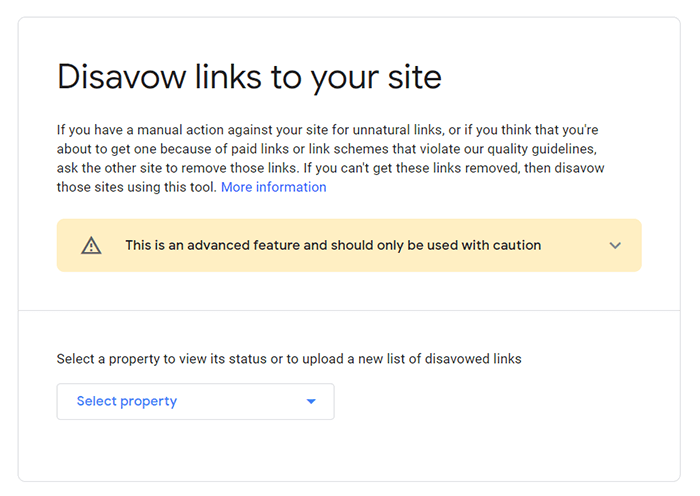
The disavow tool tells Google to ignore specific backlinks when evaluating your site. This powerful instrument should be used cautiously as improper disavowal can harm rather than help your rankings. Google processes disavow files slowly, typically taking several weeks to fully implement your directives.
Disavow at the domain level rather than individual URLs when sites contain multiple toxic links to your domain. This approach prevents the same site from creating new problematic links to different pages. However, use URL-level disavowal when specific pages on otherwise quality domains contain spam sections or user-generated content with your links.
The tool operates as a signal rather than a directive. Google may choose to ignore some disavow instructions if its algorithms determine the links don’t actually harm your site. This protective mechanism prevents mistaken disavowal of beneficial links. However, it also means disavowal doesn’t guarantee immediate penalty removal.
Creating a properly formatted disavow file
Disavow files follow specific formatting requirements. Errors in file structure can cause Google to reject your entire submission. The file must be plain text format with the .txt extension. Each line contains either a comment, a specific URL, or a domain directive.
Comments begin with the hash symbol and provide organizational notes. Use comments to separate sections and explain disavowal reasoning. This documentation helps if you need to review the file later. For individual URLs, enter the complete address including protocol. For domain-level disavowal, use the format « domain:example.com » without protocol or www prefixes.
- Open a plain text editor like Notepad on Windows or TextEdit on Mac
- Start with a comment line describing your disavow purpose
- List toxic URLs one per line with complete addresses
- Use domain commands for sites with multiple toxic pages
- Save the file with .txt extension ensuring plain text format
- Review for formatting errors before uploading
Submitting your disavow file through Search Console
Navigate to the Google Disavow Tool through your Search Console account. The tool URL is specific and not easily accessible through normal Search Console navigation. Select the property corresponding to the domain requiring disavowal. Google will display warnings about improper use potentially harming your site.
Upload your prepared disavow file using the interface upload button. Google processes the file and displays any formatting errors detected. If errors appear, download the file, correct the problems, and resubmit. Once successfully uploaded, Google shows the submission timestamp and begins processing your directives.
Each new upload completely replaces your previous disavow file. If you need to add new domains to your disavow list, retrieve your previous file, add the new entries, and resubmit the updated version. Never submit partial lists assuming they’ll append to previous submissions. This replacement behavior requires careful file management to avoid accidentally removing previous disavowals.
Post-disavowal monitoring and recovery timeline
Disavow implementation follows a gradual timeline. Google doesn’t immediately recalculate your rankings after file submission. The search engine must recrawl both your site and the disavowed referring domains to update its link graph. This process typically requires several weeks to several months for complete effect.
Monitor your rankings, organic traffic, and Search Console metrics weekly following disavowal. Initial changes may be subtle as Google processes portions of your disavow list. Significant improvements often appear suddenly once critical toxic domains are fully processed. Patient monitoring prevents premature conclusions about disavowal effectiveness.
If manual actions existed before disavowal, submit a reconsideration request after completing removal attempts and uploading your disavow file. The request should document your specific actions, removal attempt evidence, and commitment to quality link building going forward. Google’s manual review team typically responds within several weeks with acceptance or requests for additional action.
Preventing future toxic backlink accumulation
Proactive prevention strategies reduce the need for reactive disavowal efforts. Regular monitoring catches toxic links early before they accumulate into significant problems. Implementing continuous surveillance systems creates early warning mechanisms for emerging threats.
Set up automated alerts through backlink monitoring tools. Configure notifications when new referring domains exceed spam score thresholds. Establish weekly review routines to examine recent link acquisitions. This consistent vigilance identifies both negative SEO attacks and unintentional toxic link generation from misguided marketing efforts.
Audit your own link building practices regularly. Ensure all outreach follows Google’s quality guidelines. Avoid purchasing links, participating in link exchanges, or using automated link building software. Focus on creating valuable content that naturally attracts editorial links. Quality content strategies generate sustainable link profiles resistant to algorithmic penalties.
Building a healthy backlink profile for long-term success
Long-term web indexing success requires shifting from toxic link removal to quality link cultivation. A strong backlink foundation comes from diverse, relevant, authoritative sources acquired naturally over time. This approach creates resilience against both algorithm updates and competitive attacks.
Focus acquisition efforts on editorial links from industry-relevant publications. Contribute expert commentary, original research, and valuable resources that publishers want to reference. Develop relationships with journalists, bloggers, and content creators in your space. These connections generate natural link opportunities as you become a go-to expert source.
Diversify your link sources across different domain types. Educational institutions, government agencies, industry associations, and media outlets each contribute unique authority signals. Avoid over-concentration from any single source type. A natural profile includes links from various contexts including resource pages, blog mentions, news coverage, and social references.
Frequently asked questions about toxic backlinks
How quickly do toxic backlinks harm my rankings?
The impact timeline varies based on toxicity severity and volume. Small numbers of low-quality links may never cause noticeable problems as Google’s algorithms automatically discount them. However, concentrated toxic link campaigns can trigger ranking drops within weeks. Manual penalties typically occur only with deliberate, large-scale manipulation patterns.
Should I disavow all low-authority backlinks?
Absolutely not. Low authority doesn’t equal toxic. Many legitimate small websites provide valuable contextual links that contribute positively to your profile. Disavow only links from sites exhibiting actual spam signals like manipulative tactics, irrelevant content, or penalty histories. Over-disavowal can remove beneficial links and harm your rankings.
Can competitors harm my rankings with toxic link attacks?
Google claims its algorithms largely ignore obvious negative SEO attempts automatically. However, sophisticated, sustained campaigns can still cause problems. The best defense combines proactive monitoring with rapid response protocols. Most competitive attacks fail because they lack the scale and sophistication required to fool modern algorithms.
How often should I audit my backlink profile?
Audit frequency depends on your link acquisition velocity and competitive environment. Sites actively building links should conduct monthly comprehensive audits. Established sites with primarily organic link growth can audit quarterly. However, maintain continuous automated monitoring regardless of manual audit frequency to catch sudden attacks or anomalies.
What happens if I disavow good backlinks by mistake?
Mistaken disavowal can reduce your rankings by removing positive signals. However, you can correct errors by uploading an updated disavow file with the good links removed. Google processes the new file and eventually reinstates the beneficial links. The correction timeline mirrors initial disavowal processing, typically requiring several weeks to months for full effect.

Pingback: How many backlinks do i need to rank on search engines?
Pingback: How to increase domain authority: the definitive guide - Backlinks Monitor